The Seasonal Play
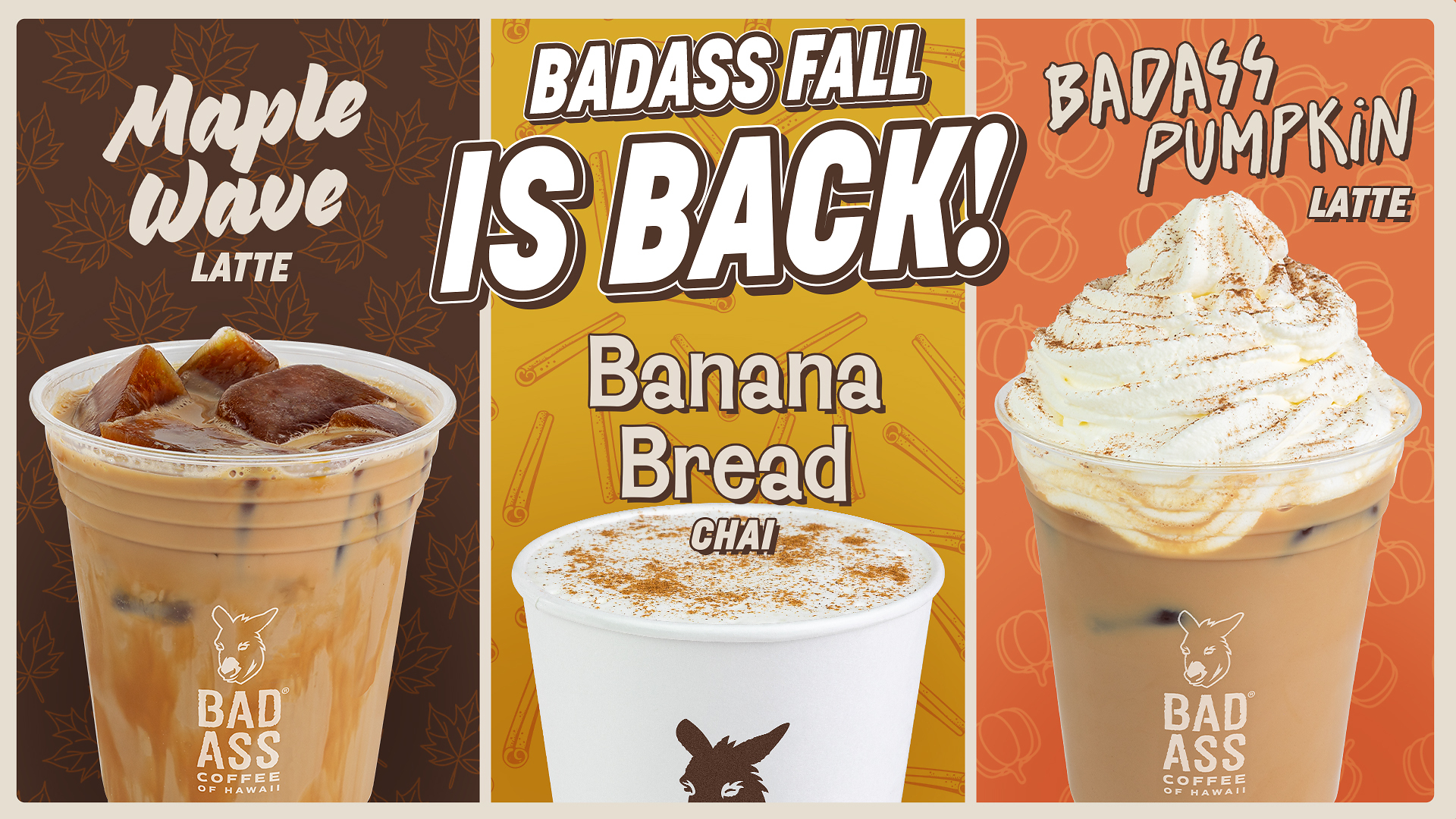
Bad Ass Coffee of Hawaii is running its second consecutive fall limited-time-offer push, re-releasing three drinks that drove guest traffic last year and scheduling a fourth, undisclosed frozen item for an Oct. 20 drop. The seasonal window runs Aug. 25 through Nov. 30 at participating U.S. locations — a roughly 100-day selling period that brackets the peak pumpkin-spice consumption cycle that now accounts for a measurable share of Q3 and Q4 revenues across the specialty-coffee segment.
The returning lineup prices range from $4.25 to $7.80 before size and location adjustments. The Maple Wave Latte — a maple-and-caramel latte with caramel drizzle — carries a $6.05 starting price. The Banana Bread Chai, blending banana, hazelnut, and cinnamon, opens at $4.25. The Badass Pumpkin Latte, layering pumpkin pie and white chocolate flavors under whipped cream, tops the range at $7.80. A Pumpkin Swirl Bread pastry rounds out the food attachment opportunity at $3.99.
Growth Context
The LTO rollout is part of a broader franchise expansion that has the brand approaching roughly 40 open U.S. locations, with 63 additional units in various stages of development. For a growing franchise in that footprint range, seasonal menus serve a dual commercial purpose: they sustain ticket frequency among existing guests and generate discovery visits from consumers who encounter fall-flavor marketing for the first time. Iain Douglas, Chief Brand and Strategy Officer at Bad Ass Coffee of Hawaii, framed the relaunch in those terms. "These menu items bring the cozy, familiar flavors people crave in fall, made with the same real Hawaiian coffee that sets us apart," Douglas said.
The brand is competing directly with national chains for the limited-time-offer mindshare that peaks between late August and late November. Specialty independents and regional franchise concepts have increasingly relied on LTO calendars to hold their position against larger operators, particularly as consumer trade-down pressures have pushed some guests toward value-tier alternatives. Anchoring the fall menu to Hawaiian-sourced coffee gives the brand a provenance differentiator that commodity-chain competitors cannot replicate at scale.
The October Wildcard
The Oct. 20 frozen-drink addition is structured as a deliberate re-engagement trigger mid-season — a tactic that addresses the traffic lull many limited-service operators see once initial LTO buzz subsides. Douglas tied it explicitly to the brand's summer Koffee Kooler frozen line, signaling that frozen-format beverages have become a recurring platform rather than a one-off promotion. That continuity matters for franchisee planning: predictable limited-time platforms allow operators to manage ingredient procurement and staff training more efficiently than surprise one-off launches.
For operators and retail buyers tracking the specialty-coffee franchise space, the fall campaign offers a data point on how a sub-50-unit brand is using LTO architecture to support unit-level economics during a critical expansion phase. Coverage of related limited-time-offer strategy in foodservice and specialty-coffee franchise growth offers additional context on how these seasonal levers translate to comparable-sales performance across the segment.
Written by Michael Politz, Author of Guide to Restaurant Success: The Proven Process for Starting Any Restaurant Business From Scratch to Success (ISBN: 978-1-119-66896-1), Founder of Food & Beverage Magazine, the leading online magazine and resource in the industry. Designer of the Bluetooth logo and recognized in Entrepreneur Magazine's "Top 40 Under 40" for founding American Wholesale Floral, Politz is also the Co-founder of the Proof Awards and the CPG Awards and a partner in numerous consumer brands across the food and beverage sector.