When businessman and wine entrepreneur Jorge Perez Companc founded Bodega Puerta del Abra in 2013, he made a calculated strategic bet: that serious, export-grade viticulture could succeed far from Argentina's traditional Andean strongholds. That thesis has begun to reshape how the industry thinks about geographic advantage and market positioning in the country. In 2022, Balcarce—a windswept prairie in Buenos Aires province previously known for potatoes and local desserts—secured its designation as the fourth official Geographical Indication in Buenos Aires, signaling a fundamental shift in where Argentina's premium wine future may lie.
The move reflects disciplined long-term thinking. Rather than chase quick returns, Perez Companc and his family approached Balcarce as a multi-year terroir research project, investing in deep site analysis and infrastructure before pursuing volume. That restraint has paid off. Today Puerta del Abra maintains production at 40,000 to 50,000 bottles annually—intentionally modest—while securing recognition from Decanter, James Suckling, and Global Masters. Most domestic allocation flows to Buenos Aires' high-end restaurant tier, while a California import arm manages US distribution and the estate explores expansion into Spain, France, and broader European markets where cool-climate and emerging-origin positioning commands premium positioning.
Terroir as Business Foundation
The estate's competitive edge rests on rigorous terroir methodology. Perez Companc engaged renowned French soil specialists Lydia and Claude Bourguignon—known for advising blue-chip Burgundy domaines—to conduct comprehensive site mapping and analysis. Their research revealed a unique soil composition: clay and limestone seams, granite traces, and marine imprint at just over 100 meters elevation, positioned 30 to 50 kilometers from the South Atlantic. The team carefully notes that Puerta del Abra represents a highly specific micro-location within the broader Balcarce GI, with distinct wind dynamics created by the Tandilia mountain system and soil composition not necessarily reflective of the wider appellation.
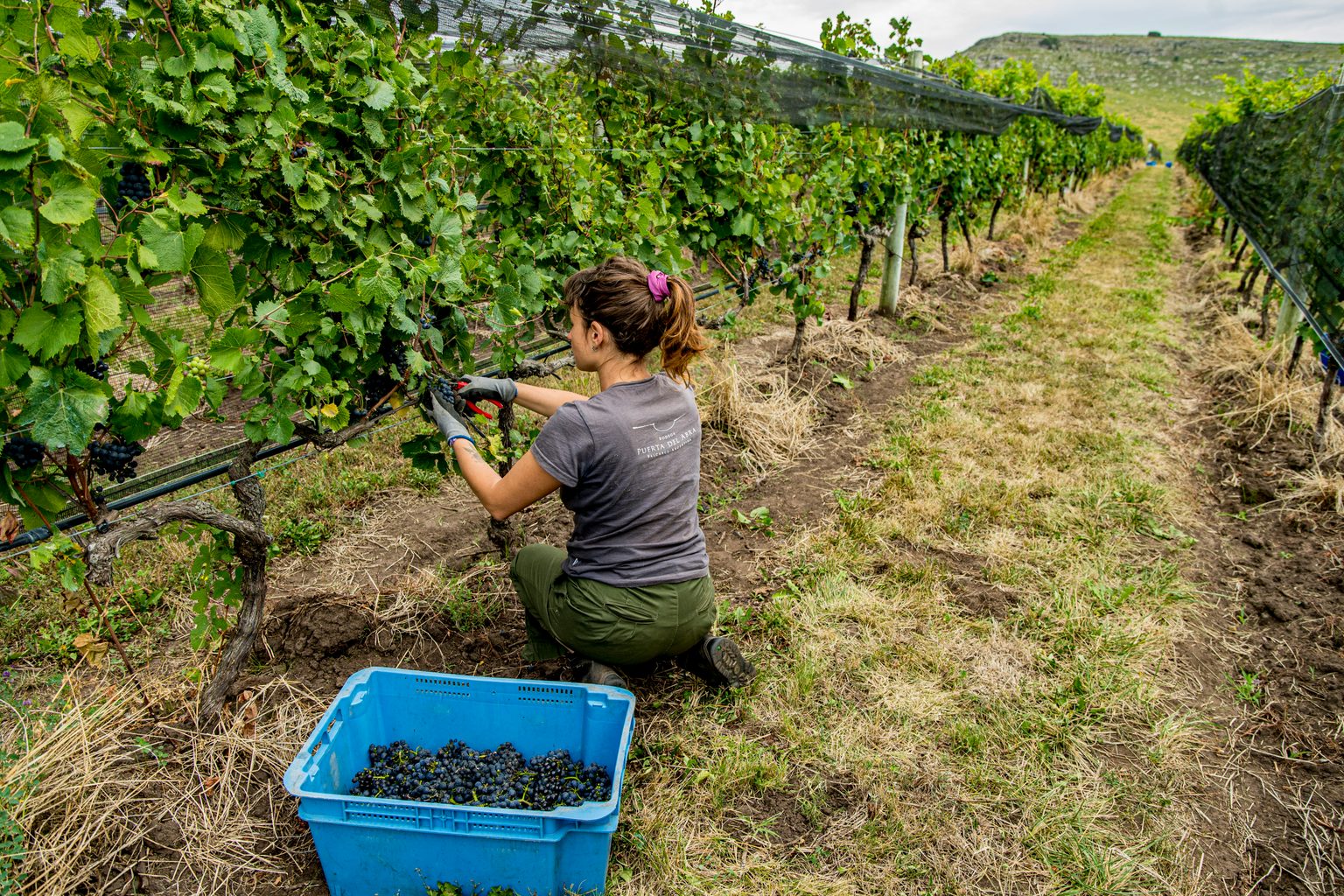
This precision positioning informs every operational decision. Rather than plant Malbec—Argentina's default premium varietal—the estate selected Chardonnay, Riesling, and Albariño for whites, with Pinot Noir, Cabernet Franc, Bonarda, Tannat, and Merlot for reds. Moderate summer highs and strong Atlantic breezes slow ripening and moderate alcohol levels, while cool nights preserve critical acidity. The trade-off is weather volatility: significant annual rainfall and limited natural wind shelter require active management through mesh on exposed rows and carefully calibrated drip irrigation. Management treats weather risk as a defining characteristic of the vintage profile rather than an operational liability, building a production philosophy around seasonal variability and responsive decision-making.
People and Culture as Strategic Assets
Operating in a region with no existing wine labor infrastructure, Puerta del Abra built workforce and leadership around local hiring and continuous education. The winemaking team has been female-led since Delfina Pontaroli established production protocols, with Mariana Boero serving as head winemaker and Deborah as assistant winemaker. In an industry segment where female leadership remains uncommon, the estate integrates this as core operational philosophy rather than messaging strategy. This approach extends across the organization, emphasizing collaboration and equal opportunity as functional business values.
Product Strategy and Market Positioning
The core Puerta del Abra line—the US market designation for their estate vineyard El Vallecito wines—emphasizes pure varietal expression tied directly to terroir specificity. The Albariño integrates chalky soils and southern light, balancing ripe fruit against quiet mineral definition. The Riesling builds aromatic complexity through slow ripening while maintaining critical acid spine. Pinot Noir transitions from its traditional Argentine role as sparkling base to establish itself as an elegant, structured still red with genuine aging potential. The Chardonnay, developed under Velo de Flor—a technique closely associated with Jerez—has become among the estate's most compelling expressions. Red portfolio holdings feature pronounced pyrazine notes in the 100 percent Cabernet Franc, red fruit and gentle spice in Bonarda against chalk-defined backdrop, and darker fruit with firm yet polished tannins in Tannat with subtle savory notes.
The secondary Itzae line operationalizes experimental strategy. Each vintage, micro-vinifications of available holdings identify the most compelling expressions, which are then assembled into red and white blends. This approach yields wines that shift character edition to edition, reflecting complete vintage diversity and positioning the estate as a learning laboratory rather than a commodity producer.
Sustainability and Market Recognition
Sustainability commitments embed operational discipline across all functions. In 2023, Puerta del Abra obtained vegan certification, formalizing long-standing practices avoiding animal-derived fining agents. The estate has transitioned to lighter bottles, implemented Good Agricultural and Manufacturing Practices standards, and participates in Balcarce's Green Fridays program promoting environmentally conscious industry behavior.
Recognition from major critics validates the strategic approach, yet the estate remains deliberately production-constrained. The team's own positioning statement captures the business philosophy: "We started this winery as a passion project of the family, something to be shared with those closest to us. As the project evolved, it opened new opportunities, but never losing focus of the foundational spirit. Today, we seek to find those in the industry that share that intimate passion for wine, willing to push boundaries and explore something new. For those, Balcarce awaits."
For industry strategists, Balcarce and Puerta del Abra demonstrate that Argentina's competitive wine future extends beyond established Andean frameworks. For executives mapping geographic diversification and emerging-market positioning, the estate's model—disciplined investment, terroir precision, talent development, and intentional production constraints—offers a replicable blueprint for building premium category presence in underutilized regions.