When Val Griffith and Breezy Griffith launched SkinnyDipped a decade ago from their Seattle kitchen, they faced a challenge that would define their growth strategy: how to scale nationally while protecting the brand integrity that made them attractive to retailers in the first place. Their answer—a disciplined approach built on non-negotiable quality standards, strategic partnership decisions, and clear leadership structures—offers a case study in sustainable brand scaling for the better-for-you snacking category.
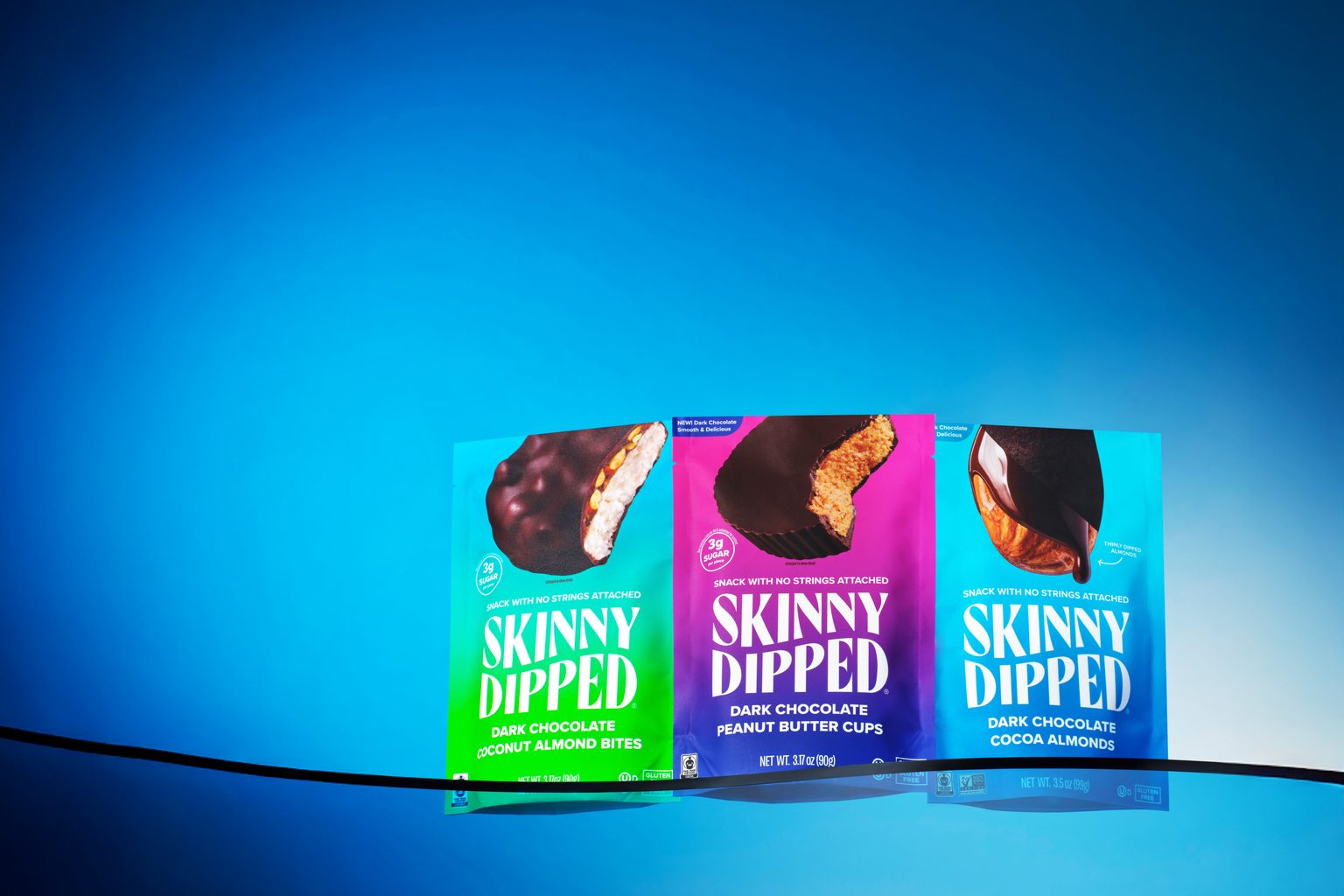
The company's explosive growth tells the story. SkinnyDipped evolved from a single product (thinly dipped almonds) to a portfolio of 21 SKUs, now distributed across more than 30,000 retail locations including Walmart, Costco, and Starbucks, plus e-commerce channels like Amazon. What's remarkable is not the growth itself, but how the company maintained operational discipline throughout accelerated scaling.
From the outset, Val and Breezy established a decision-making framework grounded in functional clarity rather than hierarchy. "We've learned to trust each other's strengths, so whoever is closest to the decision typically takes the lead," Val explains. This approach proved critical when national retailers came calling early, demanding rapid scaling. Rather than chase every opportunity, the team implemented a quality gatekeeping process. "We've turned down opportunities that didn't align with our standards," Breezy notes. "It's tempting to cut corners when you scale, but we've always believed that trust with the consumer is everything. Once you lose that, you lose the brand."
Breezy freely acknowledges the team lacked traditional CPG credentials. "We didn't come from a traditional CPG background by any means, but we figured it out," she says. Their operational learning curve was steep—manufacturing, packaging, and distribution were mastered through execution rather than prior expertise. Yet this outsider perspective became a competitive advantage. "Execution came from doing, not overthinking," Breezy explains. "We learned on the fly figuring out manufacturing, packaging, and distribution step by step."
The company's product philosophy became its strategic anchor. From day one, ingredients and taste quality served as non-negotiable decision filters. "If it didn't taste exceptional, it didn't make the cut. That philosophy has guided every decision we've made," Val says. The market opportunity was clear: consumers wanted satisfying sweet snacks without excess sugar or artificial ingredients. "We saw a gap in the market when we couldn't find a satisfying sweet snack in the grocery store that wasn't filled with sugar or junk. We set out to create exactly that and build a brand around it that was bright, bold, modern and ultimately, very 'us,'" Breezy explains.
This strategy positioned SkinnyDipped ahead of broader industry trends. "There's been a huge shift toward transparency and better-for-you options," Breezy observes. "The bar is higher now, which we think is a good thing." Rather than view rising consumer standards as a constraint, the company designed its growth trajectory around these expectations.
Looking forward, the leadership team is focused on innovation beyond the traditional candy and nut aisle—"expanding in ways that stay true to our roots," as Breezy describes it. Val summarizes the strategic framework guiding these decisions: "We stay relentlessly focused on quality, innovation, and purpose. Those three pillars keep us grounded and differentiated."