
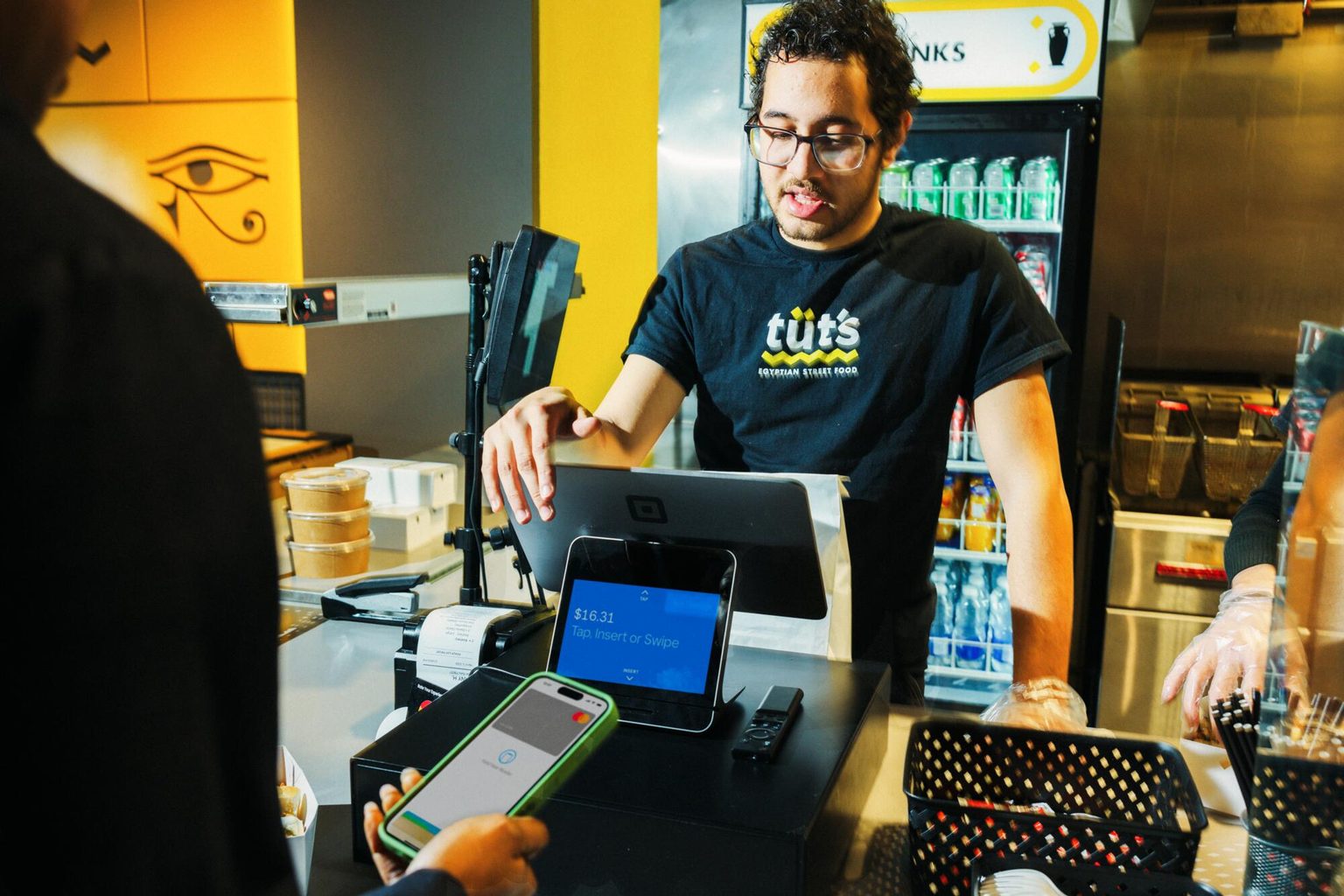
For food and beverage executives, the technology landscape has become a critical business decision. No longer is point-of-sale selection simply a payment infrastructure choice—it's a strategic determination about how your business will scale, adapt, and compete. The most successful F&B operators recognize that their technology stack directly impacts labor efficiency, inventory management, customer loyalty, and ultimately, profitability. This shift is reshaping how industry leaders evaluate their technology partnerships.
Square's strategic approach to this challenge offers a clear case study in how comprehensive platform integration can address the operational complexity facing F&B operators today. The company has evolved its offering far beyond its original mobile payment premise into a fully integrated commerce ecosystem spanning in-person payments, e-commerce, payroll, inventory management, customer engagement, and capital access. This is not incremental feature expansion—it reflects a deliberate strategy to eliminate the operational friction that comes from managing disconnected point-of-sale, accounting, labor, and customer data systems in parallel.
For F&B executives managing omnichannel operations, fluctuating labor conditions, rising costs, and complex consumer expectations, fragmented technology presents a compounding risk. Each disconnected system creates data silos, delays in decision-making, and operational blind spots. Square's philosophy directly addresses this pain point: unify the business systems your team relies on daily to create a single source of operational truth. This approach allows restaurant operators to manage orders across dine-in, takeout, and delivery channels while simultaneously tracking inventory, analyzing performance, and executing customer engagement strategies—all from an integrated platform designed to keep operational insights immediately actionable.
The design philosophy behind this integration matters as much as the feature set. Rather than impose rigid, industry-specific workflows, Square has built flexible architecture that allows operators to tailor functionality to their specific business model without sacrificing user simplicity. This flexibility is strategically important: modern F&B businesses increasingly blend retail, hospitality, and direct-to-consumer models in ways that require equally adaptive technology.
Scaling Multi-Channel F&B Brands: The Van Leeuwen Ice Cream Model
Van Leeuwen Ice Cream provides a practical example of how integrated technology drives scaling in the F&B sector. The brand evolved from a single scoop truck in New York to a nationally distributed premium ice cream company with brick-and-mortar storefronts, grocery retail distribution, and a highly engaged customer base. This growth trajectory demands technology infrastructure capable of seamless scaling across channels while maintaining operational consistency and brand experience integrity.
For multi-channel F&B brands like Van Leeuwen, the operational challenge is acute. High-volume urban storefronts require speed and reliability at point-of-sale; packaged goods expansion introduces separate logistics, inventory, and reporting requirements; and customer data must remain unified to drive loyalty initiatives across all touchpoints. An integrated platform enables this complexity by providing real-time visibility across every channel and business unit, allowing executives to understand customer purchasing patterns, demand peaks, and product performance across the entire operation.
The data advantage is particularly significant for scaling F&B brands. With an engaged customer base, the ability to access behavioral insights—purchase frequency, product preferences, seasonal demand patterns—directly informs staffing decisions, inventory management, and new product launches. For companies managing growth across multiple locations and channels, these real-time insights become a competitive advantage, allowing operations teams to remain agile without sacrificing the sophistication required to manage an increasingly complex business.
This is ultimately how technology accelerates growth in the F&B sector: by reducing the operational overhead required to manage scale, allowing management teams to focus on product excellence and customer experience rather than system administration.
Consolidation as a Strategic Imperative
Beyond feature sets, Square's strategic strength lies in its relentless focus on usability and accessibility. Sophisticated technology creates value only when operators and their teams can actually deploy it. Square's design approach—intuitive hardware that feels familiar, software interfaces that prioritize actionable insights over complexity, minimal implementation barriers—has been critical to democratizing enterprise-grade tools for mid-market and independent operators.
This accessibility has direct business implications. By eliminating traditional barriers like high upfront costs, long-term contracts, and technical complexity, integrated platforms have redefined what it means to scale within the F&B sector. For independent operators and emerging brands, access to reliable, comprehensive financial and operational infrastructure is often the difference between sustainable growth and stagnation.
The platform's AI integration signals an important strategic direction: toward more predictive, adaptive commerce operations. By synthesizing real-time data—local trends, customer behavior, external factors—F&B operators can move beyond reactive management into forward-looking operational planning. Staffing optimization, inventory forecasting, and demand prediction all become more sophisticated and accurate. This capability advantage becomes more pronounced as F&B operators grapple with volatile labor markets and supply chain uncertainty.
What distinguishes Square's approach is discipline: new capabilities are integrated into the broader ecosystem rather than introduced as standalone products. This maintains the simplicity advantage while continuously expanding platform sophistication. For F&B executives evaluating technology partnerships, this architectural approach reduces future technical debt and switching costs.
Industry Consolidation and Competitive Implications
At scale, Square processes hundreds of billions in annual payment volume and serves a remarkably diverse customer base. Yet the strategic significance lies not in raw volume but in the competitive standard it has established. The industry is no longer competing on transaction fees or point-of-sale hardware design. Competitors are evaluated on their ability to deliver integrated, end-to-end solutions supporting every operational aspect of a modern business.
For F&B operators, this raises an important strategic question: is your current technology stack consolidating around a unified platform that strengthens each component, or is it remaining fragmented across multiple vendors? The operational efficiency and data advantage that come from an integrated system directly impact labor productivity, inventory accuracy, customer insights, and ultimately, unit economics.
The implications for F&B are concrete. Unified front-of-house and back-of-house operations reduce order management complexity and execution errors. Real-time performance visibility enables faster operational adjustments. Integrated customer data across locations drives loyalty and repeat traffic. These capabilities compound over time, creating a widening gap between operators using unified platforms and those managing disconnected systems.
Looking forward, the F&B sector will continue to intensify its operational demands. Labor volatility, supply chain complexity, and rapidly evolving consumer preferences require technology infrastructure that is both reliable and adaptable. Platforms capable of evolving in lockstep with operator needs will define the next generation of competitive advantages in the F&B sector.
For F&B executives, the strategic lesson is clear: technology is no longer a back-office function. The choice of platform infrastructure directly influences your ability to scale, adapt, and maintain operational control as your business grows. Companies that align their technology strategy around integrated, unified platforms are positioning themselves for more efficient scaling and more sophisticated operational decision-making. Square's evolution reflects this broader shift: the most successful F&B operators will be those equipped with systems as dynamic and adaptable as the markets they serve. By consolidating around unified infrastructure rather than managing fragmented point solutions, leading F&B brands are securing operational advantages that compound over time.