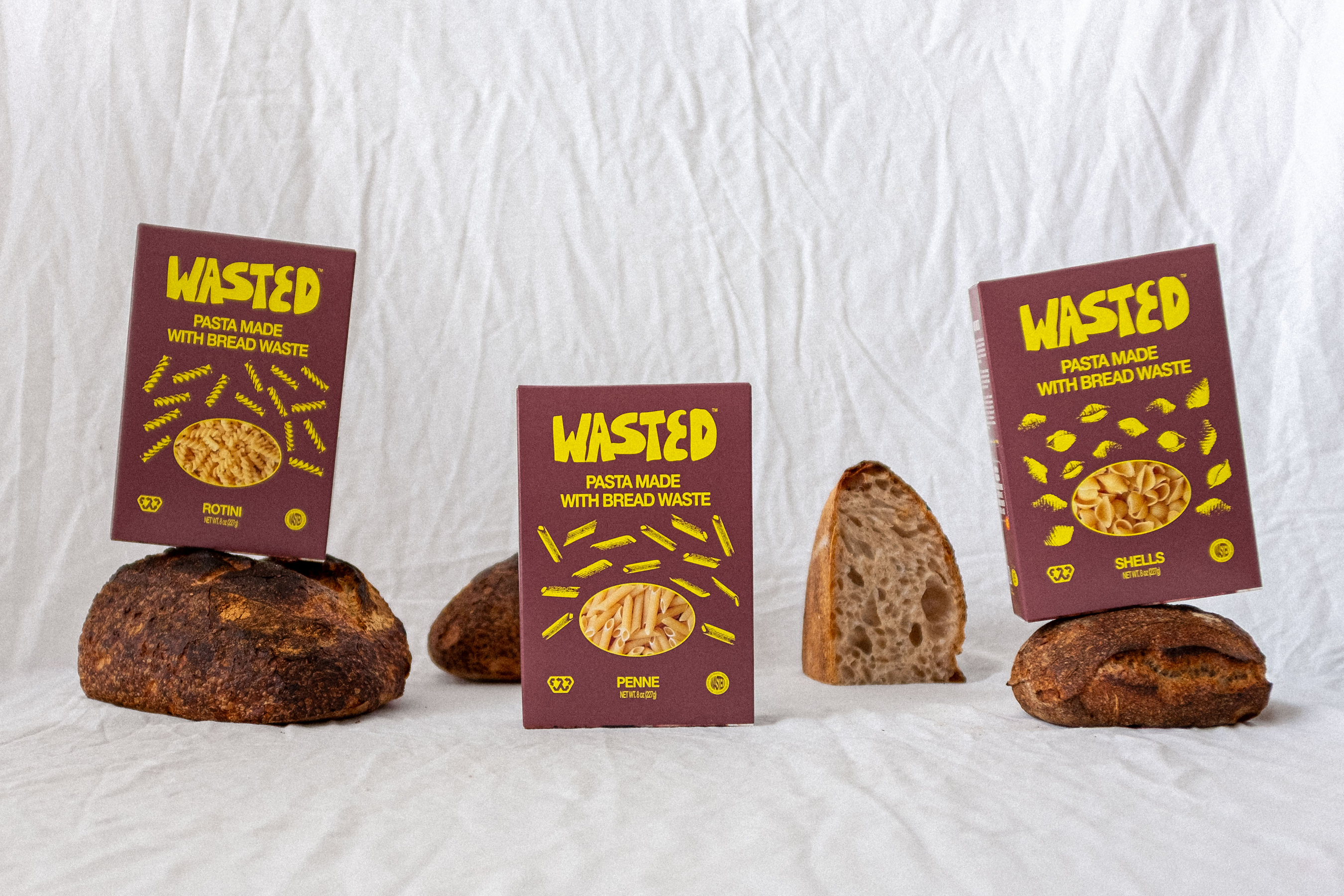
Copenhagen-founded Eat Wasted is entering the U.S. market this summer, landing shelf space at Misfits Market and Whole Foods Market as it converts a community-dinner following — now more than 10,000 guests across cities worldwide — into a grocery-scale brand. The company manufactures pasta from surplus artisanal bread rescued from European bakeries, positioning itself at the intersection of the premium-pasta and food-waste-reduction categories.
The Numbers
The U.S. launch carries measurable early momentum. The brand's first New York City dinner sold out in less than one day, and a waitlist of more than 3,000 consumers has already queued up for future events and product drops. The company is already live on its direct-to-consumer site and at Misfits Market, with Whole Foods placement targeted for later this summer. Each unit sold triggers a one-for-ten donation of pasta portions to food-relief recipients — a built-in impact metric that doubles as a retail differentiator.
Why It Matters
The U.S. premium pasta segment has grown steadily as consumers trade up from commodity dry goods, while food-waste reduction has emerged as a credible brand equity driver rather than a niche positioning. Eat Wasted co-founder Leif Friedmann, who spent years in food and hospitality before launching the brand, frames the product as a no-compromise proposition. "We've created a pasta that stands on its own for taste, texture, and quality, while also helping to reduce food waste," Friedmann said. Co-founder Jorge Aguilar echoes the commercial logic: "Our goal is to build a brand that changes perceptions by showing that some of the best ingredients are the ones that already exist."
The bread-based formulation produces a rough surface texture that helps sauces adhere — a functional attribute the founders use to justify placement alongside conventional premium pasta rather than exclusively in sustainability-oriented sets. The product is made in Europe using traditional pasta-making methods and ships in recyclable paper packaging, aligning with retailer ESG commitments that have become a standard factor in category-buyer decisions at chains like Whole Foods.
What's Next
The retail rollout is the brand's next growth lever after an event-based model that spanned Michelin-starred restaurants, music festivals, and neighborhood soup kitchens. That experiential pipeline — built initially from five-person courtyard dinners in Copenhagen — now functions as a consumer-acquisition channel feeding into packaged retail. The U.S. expansion follows a playbook increasingly common among European food-innovation brands: build urban brand awareness through chef-adjacent hospitality moments, then convert that credibility into mass retail distribution. Broader category expansion beyond pasta is implied by the company's framing, though no additional SKUs have been announced. Operators and retail buyers tracking the food-waste reduction segment or the premium dry pasta category will want to monitor Eat Wasted's velocity data once Whole Foods placement goes live.
Written by Michael Politz, Author of Guide to Restaurant Success: The Proven Process for Starting Any Restaurant Business From Scratch to Success (ISBN: 978-1-119-66896-1), Founder of Food & Beverage Magazine, the leading online magazine and resource in the industry. Designer of the Bluetooth logo and recognized in Entrepreneur Magazine's "Top 40 Under 40" for founding American Wholesale Floral, Politz is also the Co-founder of the Proof Awards and the CPG Awards and a partner in numerous consumer brands across the food and beverage sector.