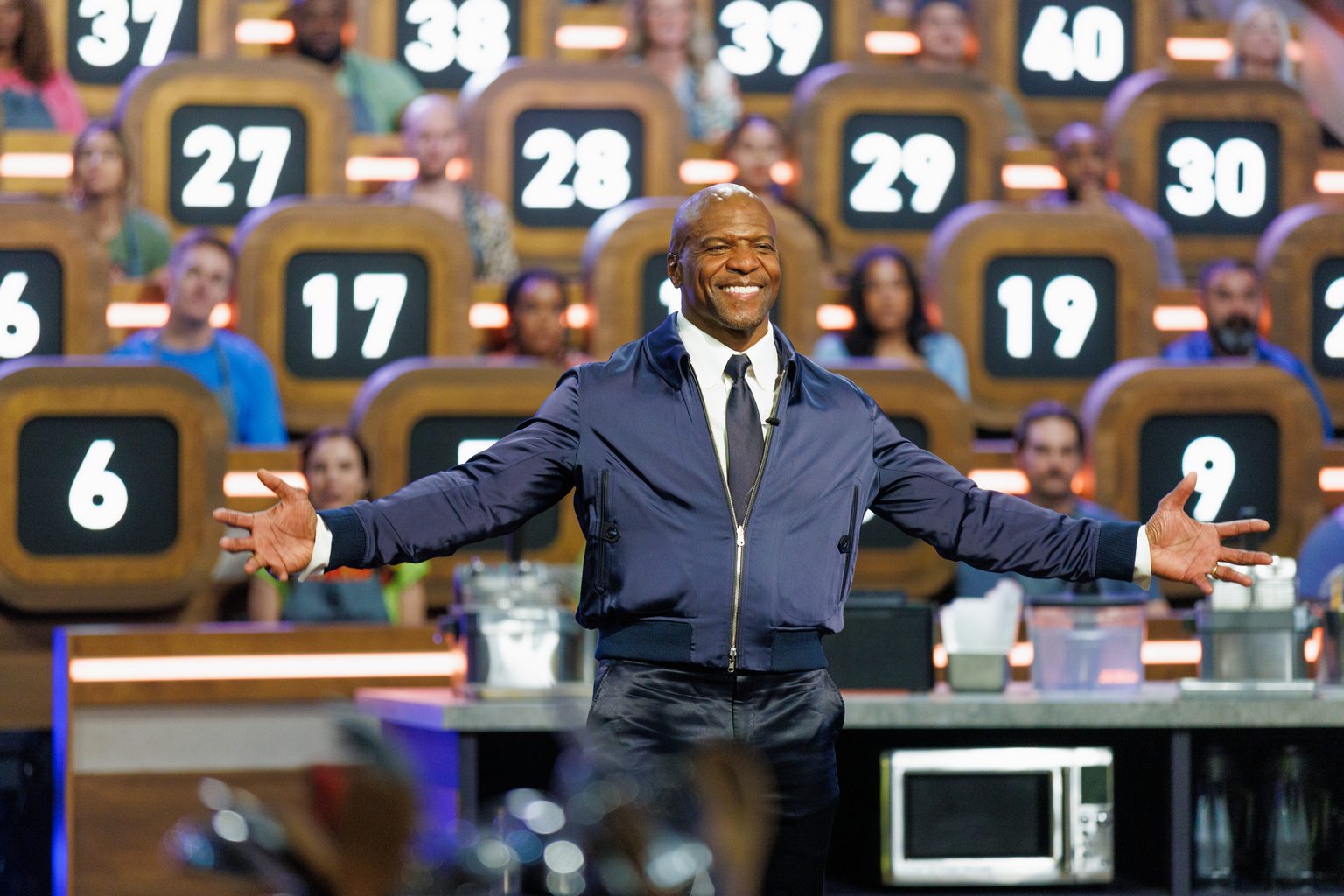
Food Network premiered 100 Cooks on June 7, positioning the network's latest competitive format squarely in the mainstream entertainment space—a strategic move that signals a broader industry shift toward programming built around accessible, relatable talent pools rather than exclusively credentialed professionals. The show features 100 of America's most talented home cooks competing in a massive arena kitchen, a structural decision designed to maximize viewer identification and audience engagement.
The talent behind the show's host selection reveals deliberate programming strategy. Terry Crews, whose larger-than-life personality has translated across television, film, and live competition formats, brings established viewership and cross-platform appeal. His genuine enthusiasm for the Food Network brand—"I am a huge fan of the whole Food Network. I keep it on in the background all the time. Watching people make and enjoy food is one of the most satisfying things"—demonstrates the kind of authentic alignment networks seek in marquee talent.
What distinguishes 100 Cooks in a crowded competitive cooking landscape is its singular focus on home cooks rather than trained culinary professionals. The contestant pool represents unprecedented demographic diversity—teachers, firefighters, lawyers, college students, parents—creating a casting strategy designed to expand the show's addressable audience. As Crews explained, the approach mirrors the success formula of America's Got Talent: spotlighting individuals with talent who would otherwise never get broadcast visibility.
Industry observers should note the deliberate positioning around amateur talent's distinct competitive advantage. "Being a home cook is different from being a chef," Crews explained. "Chefs often tell you what's good, whereas home cooks find out what you love. They are all about pleasing their guests and have a heart focused on feeding and nourishing people. They don't care about the money. They just want to watch others enjoy themselves." This narrative positioning—emphasizing emotional authenticity over professional hierarchy—directly addresses shifting consumer preferences for "real" talent and unscripted authenticity.
Designing Challenges That Demonstrate Adaptability and Problem-Solving
100 Cooks employs high-pressure competitive architecture with challenges designed to test creativity, adaptability, and skill under constrained conditions. One exemplary challenge tasked contestants with reimagining the humble rotisserie chicken, a staple found in grocery stores across America. This challenge type reveals strategic thinking about what qualities define successful home cooks in competitive formats: technical skill matters, but creativity and resourcefulness often prove decisive.
"A great home cook takes whatever is in the refrigerator and makes a masterpiece," Crews said. "They are able to work with whatever they're given and use their creativity to craft delicious meals." Contestants navigated food trivia, timed cooking battles, and unexpected twists that pushed them beyond their comfort zones. For production purposes, Crews acknowledged the emotional weight of the format: "I tend to get very invested. Every time someone had to go home, my heart broke. These are some of the sweetest, most beautiful people. And this is their dream."
Judge Selection as Strategic Counterbalance
The judge pairing represents deliberate editorial architecture: Iron Chef Alex Guarnaschelli and culinary YouTube creator Nick DiGiovanni provide complementary evaluation perspectives. Nick's technical background contrasts with Alex's more emotional approach, creating a comprehensive evaluation framework that mirrors viewer expectations for balanced expertise. Their differing methodologies consistently produced more nuanced competitor feedback while also delivering practical educational content.
Crews articulated the programming value clearly: "This is quality television that families can enjoy together. The audience will learn things that change the way people cook. Just because something has been passed down for generations doesn't make it right. The best entertainment is when you gain some educational insight without even trying."
Tapping Into Food Culture as Content Opportunity
At a time when food content commands significant real estate across social media, streaming platforms, and television schedules, 100 Cooks positions itself as a celebration of everyday Americans driving food culture—recognizing that culinary influence extends far beyond restaurants and professional kitchens into family recipes, neighborhood potlucks, and passionate home cooks experimenting after work.
Crews articulated the cultural thesis driving the format: "Food is a universal language. It's one of the main ways we show people we love and care about them. Just like music, it has the power to take you back to a moment in time." That universal appeal supports expansion potential. Crews envisions scaling the format globally—100 Cooks Brazil, 100 Cooks Italy, 100 Cooks Mexico—positioning it as a potential worldwide franchise comparable to America's Got Talent.
The format delivers genuine emotional resonance in a reality television landscape increasingly dominated by manufactured conflict. Whether audiences engage with the competition structure, the cooking techniques, the personal narratives, or the simple satisfaction of watching talented people pursue their passion, 100 Cooks is engineered to capture multiple viewer motivations simultaneously.
With strategic host selection, diverse contestant positioning, complementary judging architecture, and accessible cultural positioning all aligned, June 7 may represent the launch of television's next major food entertainment franchise.