
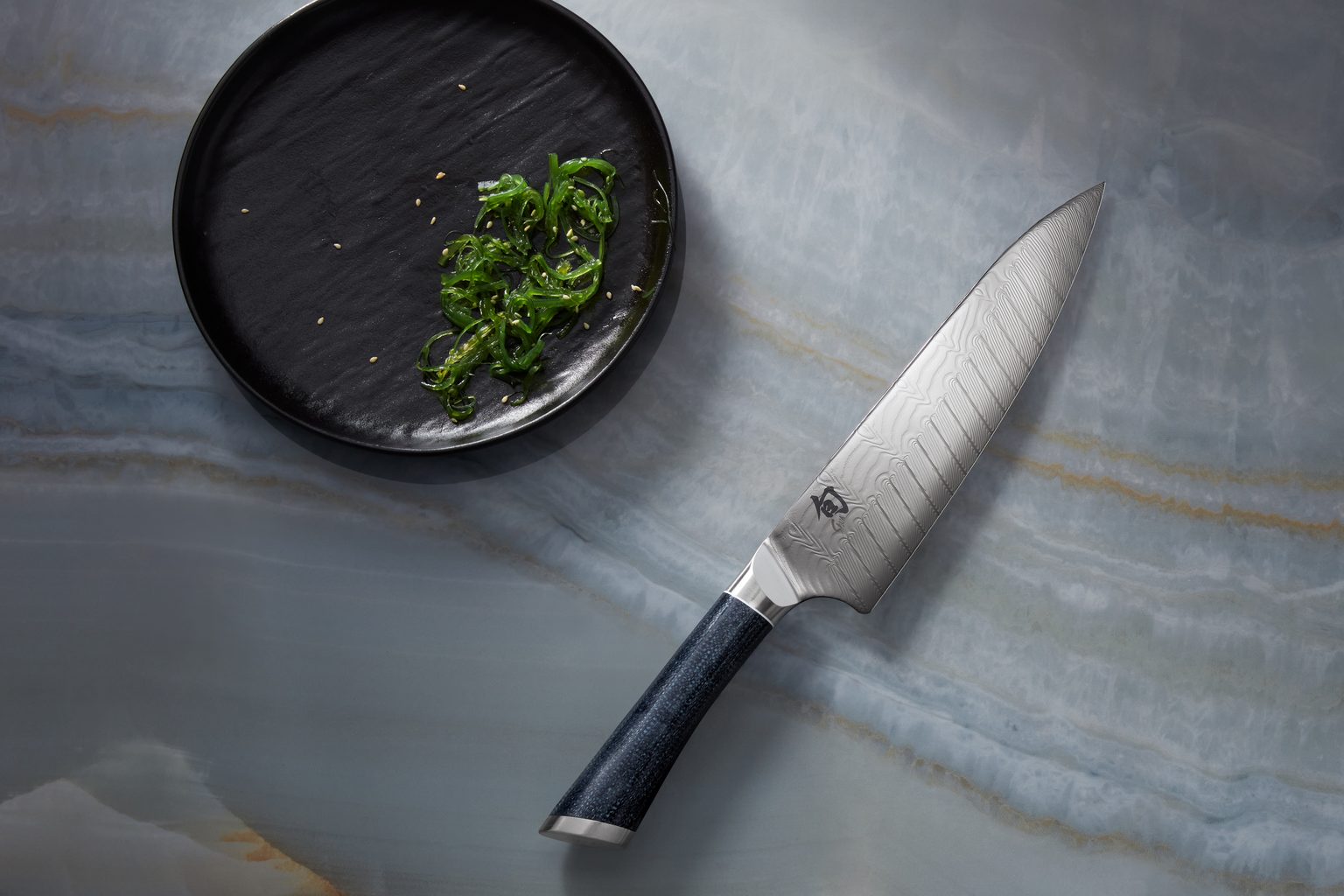
The professional foodservice equipment market is experiencing a meaningful shift: premium tools designed around precision and long-term performance are increasingly viewed as operational investments rather than commodities. Kai Corporation's new Shiranami Chef's Knife collection exemplifies this trend, demonstrating how traditional craftsmanship and engineered performance can serve as competitive advantages in a sector increasingly focused on differentiation and sustainability.
The Shiranami launch represents one of Shun Cutlery's most ambitious releases to date and signals broader strategic thinking about how equipment choices influence kitchen productivity and guest experience. Built on Japanese blade-making heritage spanning more than a century from Seki City, Shun has developed a product line that addresses a critical operational reality: the quality of foundational tools directly impacts consistency, labor efficiency, and food quality outcomes.
Engineering for Operational Performance
The Shiranami Chef's Knife employs dual-core construction using alternating VG10 and VG2 high-carbon stainless steels. Seventy-one micro-layers are forge-welded and roll forged together before being hand-sharpened to a precise 16-degree edge on each side. This engineering approach delivers measurable operational benefits: superior edge retention, exceptional sharpness, and consistently clean cutting that reduces cell damage to produce and preserves texture in delicate proteins.
For operators managing high-volume kitchens, these specifications translate directly to labor considerations. A cleaner cut means vegetables oxidize more slowly, extending the shelf life of prep work. Fish maintains superior texture through service. Proteins portion more evenly, improving yield consistency. Within professional kitchens, these refinements compound across hundreds of daily cuts, reducing waste and supporting standardization across multiple services.
Rather than emphasizing weight and brute force—the traditional Western blade philosophy—the Japanese approach prioritizes precision, balance, and efficiency. This distinction matters for long-term operator health and fatigue reduction. A properly designed knife reduces unnecessary effort while increasing control, particularly during extended prep sessions. The Shiranami handle features resin-stabilized jute micarta construction offering water-resistant performance and ergonomic comfort. The wave-inspired Damascus pattern etching serves functional purposes as well, reducing drag during slicing and encouraging food release from the blade.
Market Recognition and Positioning
Third-party validation has reinforced the collection's market positioning. The Shiranami Chef's Knife earned Best New Chef's Knife honors in the 2026 Esquire Home Awards. The Shiranami 6-Piece Block Set received recognition in the 2026 Robb Report Home Awards, while the collection previously garnered Best New Kitchen Knife honors at the 2025 BLADE Show—a primary industry showcase for knife innovation.
These accolades reflect an evolving visibility trend in hospitality design. As open kitchen concepts become standard and chefs engage directly with guests, professional tools have transitioned from hidden operational assets to visible brand elements. Premium cutlery now communicates craftsmanship and attention to detail as part of the overall guest experience, much like handcrafted cookware or custom cooking equipment.
Strategic Implications for Equipment Investment
This positioning aligns with broader industry trends around equipment longevity and total cost of ownership. Luxury is increasingly defined not by excess but by restraint—investing in fewer tools that perform exceptionally well over extended periods. That philosophy supports operational efficiency: restaurants that invest in equipment capable of improving consistency, reducing labor fatigue, and supporting craftsmanship generate measurable returns through improved food quality and extended equipment lifecycle.
Shun's commitment remains grounded in principles that have guided Japanese blade-making for generations: respect for materials, obsessive attention to detail, and purposeful design. Every knife undergoes more than 100 individual manufacturing steps, a level of detail increasingly uncommon in large-scale production environments.
The Shiranami collection does not attempt to reinvent the chef's knife category. Instead, it refines through thoughtful engineering and uncompromising execution—positioning premium cutlery as a strategic equipment decision aligned with broader industry movements toward sustainability, operator wellness, and operational consistency. As foodservice operations continue navigating labor challenges and quality expectations, the equipment decisions made today directly influence operational efficiency and competitive positioning for years to come.